 Details
Dale Lovell, author of Native Advertising: The Essential Guide, offers his view on the future direction of native advertising.
Eight years ago, my book, Native Advertising: The Essential Guide was published in the UK/US by Kogan Page. It was the first - and so far - the only definitive guide to native advertising, charting the evolution of the format since its popular inception in 2012.
was part guidebook, part history of digital ad formats, part tips, part future-gazing, part personal experience. It was, as one marketer who read the book told me a few years back: “a great snapshot of the industry at this time”.
From 'programmatic native' to an IAB ad format
The world has changed significantly since 2017 - and so too has native advertising. Broadly speaking, today, native advertising has split into two different camps.
When I wrote the book, ‘programmatic native’ was only just beginning to take root; I know, because the business I ran, Adyoulike, was one of the pioneers. Programmatic native turned native advertising into an IAB standard ad-format; and the format grew and grew on the back of access to the advertising trading platforms.
This paved the way for businesses such as Triplelift, Sharethrough and Adyoulike to outgrow their ‘native advertising’ beginnings and quite quickly morph into larger, regular display SSPs. This was the natural course of action for these businesses - but it has had an impact on native advertising today.
For a start, all of a sudden, native advertising formats became just one of several presented to buyers at once - native was no longer uniquely pushed or uniquely measured. Native was now quite literally and figuratively put inside a box.
This commoditisation of the format so that it could be bought and sold just like any other digital ad format, like an MPU (or 300x250 as the young’uns call them), banners or even video pre-roll, meant that for many people in media, this format is what native advertising is. Ask a media trader or even a planner at a major agency what native advertising is, and most may well describe it as this programmatic-style format.
Native advertising as an IAB ad format is established. There are pre-determined sizes and formats and stylings that adhere to industry and platform requirements. That is unlikely to change.
So far, so obvious.
With this push, and the bringing into the fold of the ‘challenger ad format’ that was native advertising, the label native advertising, which has always had its critics, thereby started to cause some problems for those ‘outside’ this tradeable native space. What is native advertising? Is it a format? Or is it a process?
Content-led in the era of AI
This is where the second, infinitely more interesting camp of native advertising, comes in. Championed by publishers, primarily, this type of native advertising comes with many names; branded content, content partnerships, brand studios and any other combination; but it ultimately means publisher and advertiser teaming up to create something for the advertiser that is ‘content led’, which is then shared across that publisher’s platforms and promoted to their audiences.
This is the ‘umbrella’ term for native advertising, which is mostly what I covered in my book. It’s what the majority of entries to The Native Advertising Institute Awards are made up of, for example, and what the judges and case studies like to talk about.
When I wrote the book eight years ago, many publishers were very passionate about native advertising because they saw it as the last-stand against commercial encroachment from the techies. It was, hopefully, going to shore up declining ad revenue. Fast forward nearly a decade and most feel that ship has sailed. In the face of declining page impressions and ever-more cuts, publishers are doing what they can. But as AI eats into their traffic and creative cuts get deeper; it’s a tough place to be.
So where does that leave native advertising, or rather the phrase and definition of the format? Is it just going to be used by an ever smaller pool of practitioners, serving up branded content to an ever-smaller pool of readers? Or is it now synonymous only with IAB standard ad formats?
The role of the creator economy
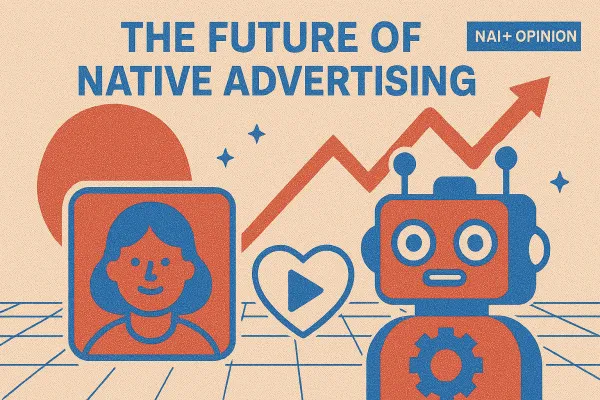
As ever, the market evolves. Ideas develop. And personally I think the natural evolution of native advertising is to embrace the creator economy. Creators, influencers, call them what you will, but this is where native advertising is heading.
Why? The simple answer is reach and scale. As publishers reach and attention has declined, brands want to see more. And with creators taking a bigger spotlight, working closely with brand studios, publishers and marketers, that reach is achievable and the returns are significant.
The Institute of Practitioners in Advertising (IPA) published research in October 2025, suggesting that when creators were assessed for long term brand growth, they delivered the highest total ROI of any channel. The effectiveness of creators and the growth of that channel is only likely to grow, in my opinion. The majority of the methods, tools and ways in which creators speak to their audiences are likely to adopt similar styles and well-trodden branded content approaches most publisher studios will be familiar with.
Some publishers might read this and think ‘what about me?’ but this is where further innovation is happening.
Take the launch of dmg newmedia and dmg creator media in October 2025, which promises to take DMG branded content to platforms like Tik-Tok, with ‘journalistic credibility’. There’s also Future Publishing’s Collab, which promises to be an innovative new initiative aimed at bringing together the influence of today’s top digital creators with the trusted authority of Future’s media brands - and you get an idea of the direction future brand partnerships are going in. Publisher and journalistic expertise are being infused with the authenticity and reach of the creator economy.
This is what more and more specialist businesses, such as Loomify Collective, where I am an Executive Director, are increasingly doing too - bringing everything together, often partnering with smaller publishers, independent creators and specialist newsletter brands to create native advertising campaigns that transcend some of the more traditional publisher partnerships of years-gone-by.
So, native’s evolution towards a creator-led approach makes sense. After all, what’s more native advertising than a creator, speaking to and like their audiences, in the way they like to be spoken to, on behalf of a brand? Add in publisher platforms, wider distribution and amplification opportunities that transcend the traditional marketing silos of search, social and display, and the future of native advertising suddenly looks bright.
Follow Dale on LinkedIn at: https://www.linkedin.com/in/dalelovell/