Goals and objectives
AT&T Business aimed to highlight the unique value proposition of its advanced network infrastructure to The Washington Post’s most influential readers, including C-suite executives, business decision-makers (BDMs), and IT decision-makers (ITDMs). The campaign focused on three core pillars of AT&T’s offering:
- The unmatched scale of AT&T’s network
- The exceptional resiliency of its infrastructure
- FirstNet, the nationwide communications network built for and with public safety professionals
The objective was to engage this high-value audience through content tailored to their interests and reading habits, measured by page views (PVs) and time spent. A secondary goal was to boost awareness and consideration of AT&T Business’s products and services, tracked via a custom content impact study.
KPI's
The campaign exceeded expectations across multiple performance indicators. Page views surpassed the guaranteed benchmark by 25%, signaling strong resonance with the target audience. Time spent with the content ranked at the higher end of The Washington Post’s benchmarks, indicating deep engagement—particularly with the interactive visualizations. Analytics revealed that users frequently scrolled back to revisit the maps, reinforcing their impact.
On social media, “The Storm Effect” tripled benchmark click-through rates (CTR) on both Facebook and LinkedIn. LinkedIn engagement rates also outperformed benchmarks by 3x. A related TikTok video generated the highest number of comments ever recorded for an AT&T Business TikTok post, demonstrating exceptional engagement on the platform.
Qualitative feedback revealed that users found the story personally relevant and compelling, with many indicating they would share it with others. The power outage map was particularly praised for its clarity and effectiveness. Notably, many users who previously held neutral views of AT&T reported a more favorable perception after reading the piece, viewing the brand as innovative and technologically advanced.
A custom content impact study showed that “The Storm Effect” outperformed a control article across key brand metrics, including brand awareness, ad recall, brand familiarity, consideration, differentiation, secure connectivity, quality of products and services, leadership in public safety, community impact, and overall inspiration.
Target audience
Geography: United States
Demographics: Age ranges 18–26, 27–44, and 45–60; gender-inclusive; ethnically diverse; professional roles include C-suite executives, BDMs, and ITDMs.
Psychographics:
- Influential individuals who drive change and build networks
- Optimistic and curious thinkers
- Depend heavily on digital devices for communication and work
- Interests include business technology, IT, and corporate strategy
- Busy professionals seeking effective corporate solutions
- Value innovation, influence, and simplicity
Strategy
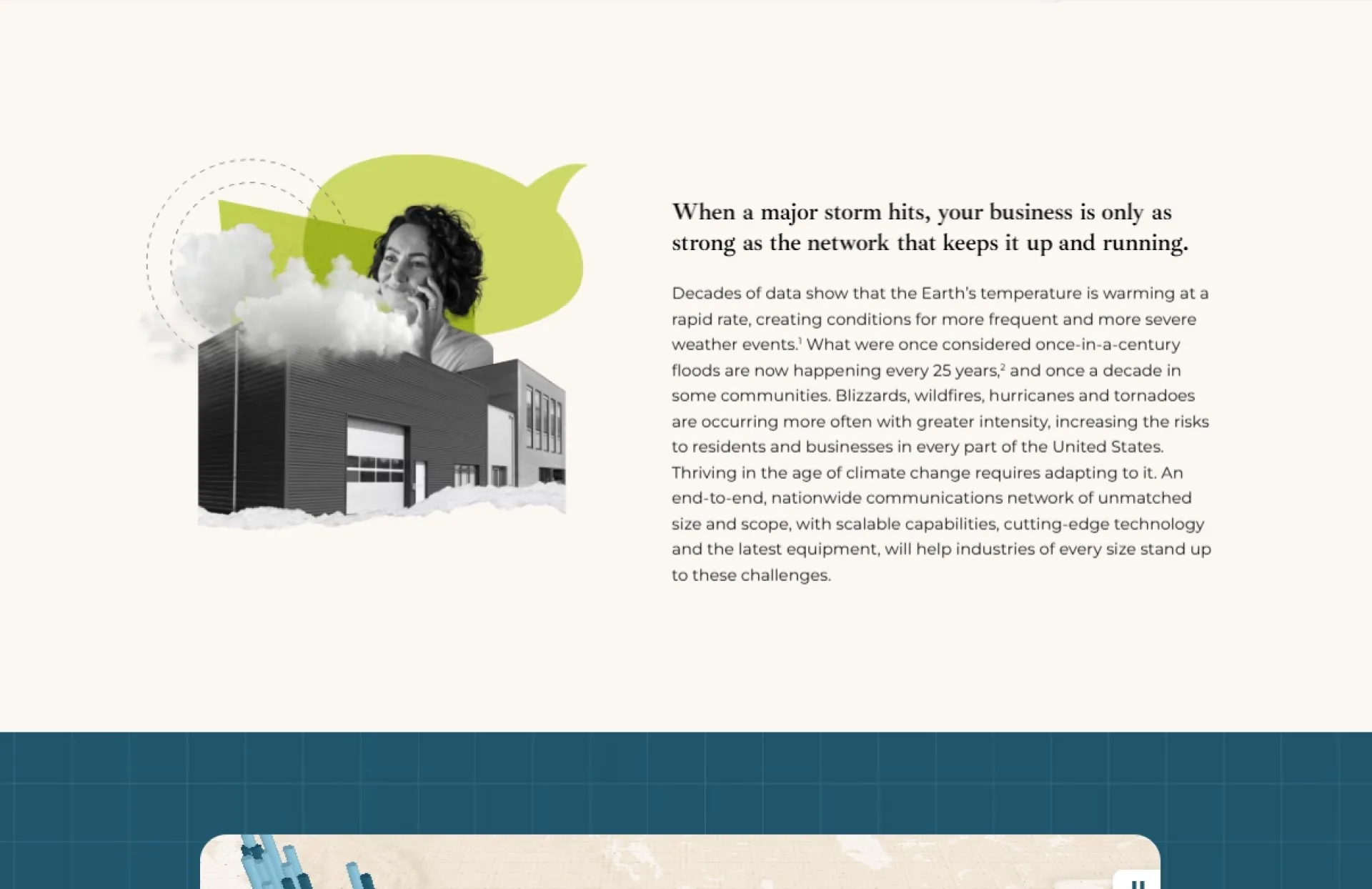
To connect AT&T Business’s message with The Washington Post’s audience, the campaign employed two core strategies: leveraging first-party audience data and embracing human-centric storytelling. These approaches were designed to simplify complex topics through The Washington Post’s expertise in explanatory journalism and award-winning data visualization.
Recognizing that climate-related content consistently ranks among the most-read on the platform, and that tech-savvy readers are 1.8 times more likely to engage with interactive content, the team identified a compelling opportunity: tell a timely, data-driven story about how climate change impacts business continuity—and how AT&T’s robust network infrastructure helps mitigate those risks.
Creative idea
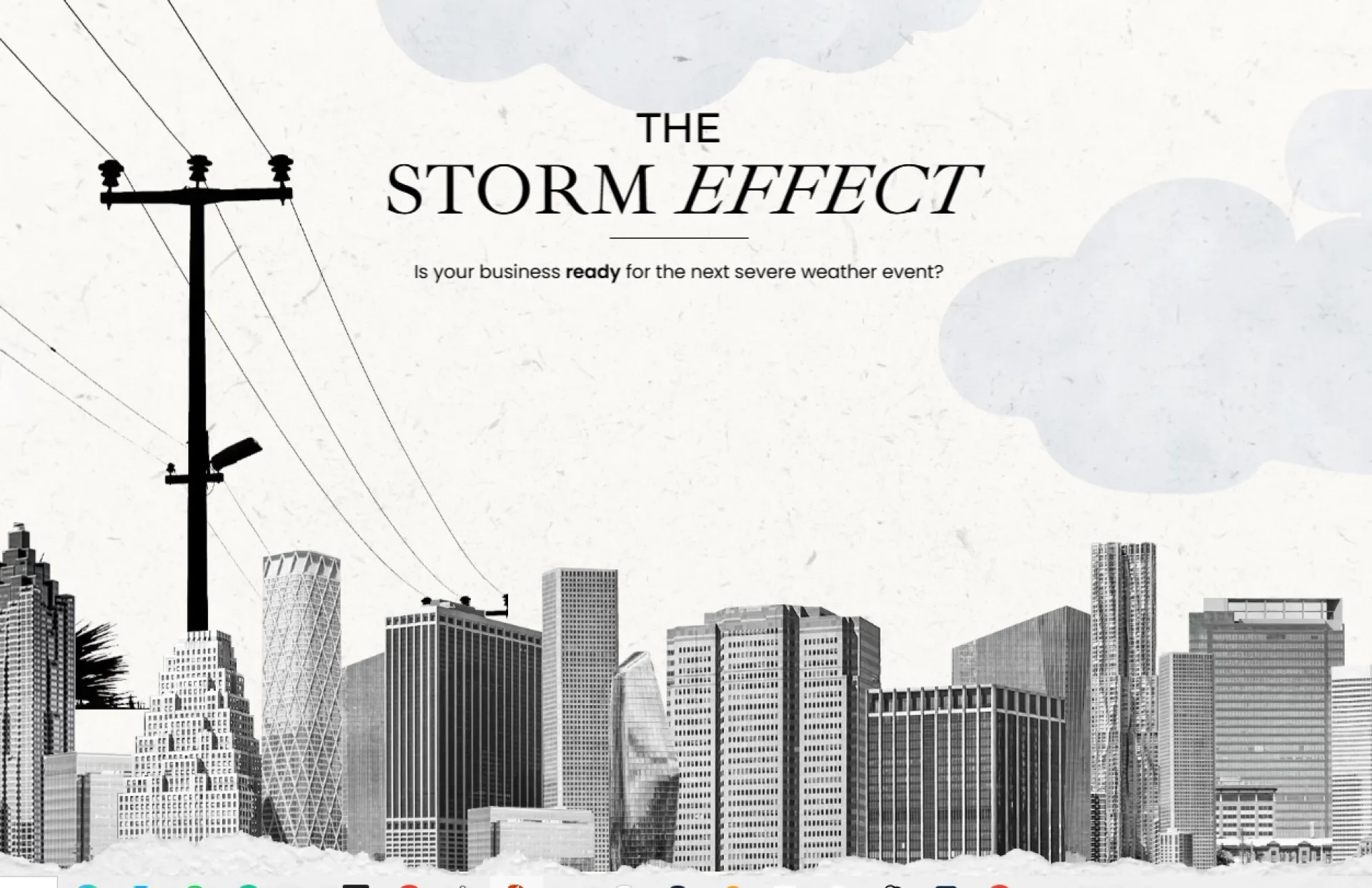
Without access to proprietary case studies or subject matter expert interviews, the creative team relied on publicly available data and internal research to craft a compelling narrative. The story centered around a real storm that occurred in February 2024, which began with snowstorms in the Northwest, triggered wildfires in the Plains, and culminated in tornadoes in the South.
Using data from the National Oceanic and Atmospheric Administration (NOAA) and publicly available power outage statistics, the team illustrated the storm’s widespread impact. This enabled a narrative that connected the disruption caused by severe weather to the critical role AT&T Business plays in maintaining operational continuity for businesses and first responders.
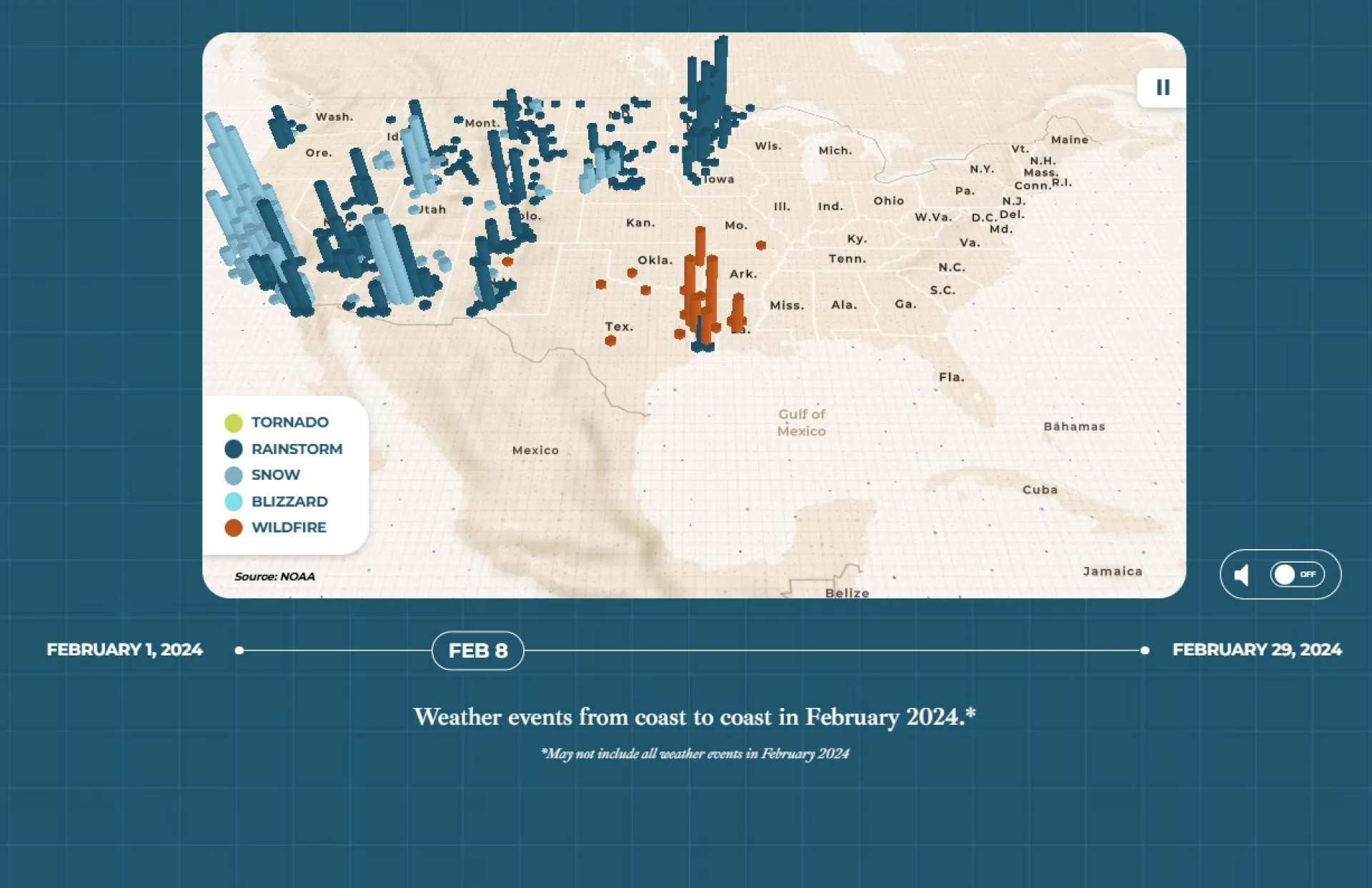
The visual experience began with a map showcasing the diversity of severe weather events across the U.S. in February 2024. This set the stage for a dynamic, scrolling map that tracked the specific storm’s path and its regional effects. The UX design allowed users to zoom into affected areas and absorb detailed insights without complex interactions, encouraging repeat engagement.
A final clickable map illustrated power outages by state, using color gradients to convey severity. Even passive viewers could quickly grasp the storm’s business implications. Following this, the content introduced AT&T Business’s solutions through clickable carousels featuring key technologies, compelling statistics, and lightly animated visuals that made the technology feel accessible and relevant.
Channels
The campaign was promoted primarily through The Washington Post’s proprietary ad units, targeting BDMs, ITDMs, and tech enthusiasts. Additional placements included:
- The 7 Newsletter — a daily briefing for busy professionals
- Pre-roll audio ads on The 7 podcast
- Apple News placements
Social media amplification spanned LinkedIn, Instagram, and Facebook. A standout element was a short-form TikTok video created in collaboration with tech influencer @Tiffintech (270.4K followers). The skit-style video featured striking statistics—such as $93 billion in storm-related damages in 2023—to communicate AT&T Business’s value proposition in a playful, digestible format.
This multi-channel strategy ensured the content reached The Washington Post’s diverse audience segments in formats tailored to their preferences.
Learnings
The campaign’s success underscores the power of human-centered storytelling in B2B marketing. By anchoring the narrative in a universally relatable topic—severe weather—the content resonated beyond traditional business messaging, resulting in record-breaking engagement across platforms.
One key takeaway was the effectiveness of simple, intuitive UX. The scrolling map and clickable visuals facilitated user interaction without requiring complex inputs, leading to extended time on page and repeat engagement. This validates the approach of using straightforward design to communicate complex ideas.
Additionally, the campaign highlighted the importance of production timelines. While the team successfully navigated a tight schedule, more lead time would have allowed for deeper data exploration and potentially richer visual storytelling. Nonetheless, the team prioritized high-impact elements and delivered a compelling final product.
Surprising Insights
Qualitative feedback also indicated a shift in brand perception. Readers not only understood AT&T Business’s capabilities but also viewed the brand as more innovative and contemporary. As one participant noted:
“I think of AT&T as the OG of telecom, but [this] makes them seem more hip and current… they’re clearly on top of things where it matters.”
User behavior revealed an exceptional level of engagement, with many scrolling back to re-examine maps and absorb additional details. This was a first for content in this category, suggesting that visual storytelling can drive deeper cognitive involvement. Another participant added:
“They’re involved in more things than I thought. I am an AT&T subscriber for cell phone services, but … this gives you a much broader view of what they do across the board.”